Battleships Logic Puzzle: A Strategic Brain Workout for Creative Minds
If you have ever enjoyed the quiet satisfaction of placing the last ship on a grid after carefully ruling out every impossible coordinate, you already understand the appeal of the Battleships Logic Puzzle. This classic deduction game, often simply grouped under logic puzzles or logic problems, challenges you to locate a hidden fleet within a grid using only row and column indicators. No random guessing. No luck. Just methodical reasoning, pattern recognition, and the slow, rewarding elimination of possibilities. For creative professionals, publishers, and small business owners looking for engaging, repeatable content, this puzzle format offers a surprisingly versatile asset.
What Exactly Is a Battleships Logic Puzzle?
At its core, the Battleships Logic Puzzle is a grid-based deduction game. You are given a square grid—typically ranging from 6x6 for beginners up to 15x15 for seasoned solvers—along with row and column clues that tell you how many ship segments appear in that line. Your task is to place a fleet of ships of varying lengths (usually one battleship of length 4, two cruisers of length 3, three destroyers of length 2, and four submarines of length 1) so that no two ships touch, even diagonally.
What makes this puzzle visually and mentally distinct is its clean, naval aesthetic. The grid itself feels ordered and purposeful. Each cell is either water or a ship segment, and the final solution always resembles a small, tidy fleet arranged with precision. The personality of the puzzle is one of quiet logic—methodical, patient, and deeply satisfying. It rewards careful thinking over speed and appeals to anyone who enjoys structure, clarity, and a clear finish line.
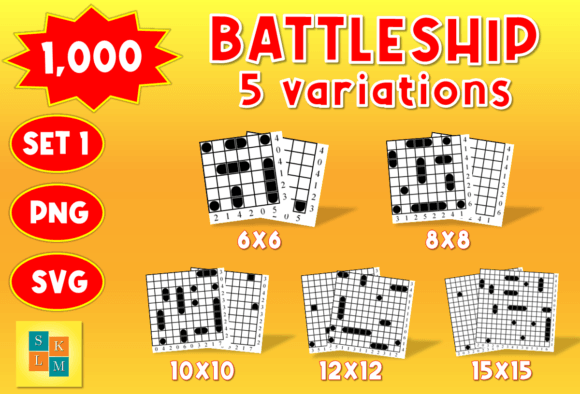
The set includes five grid sizes—6x6, 8x8, 10x10, 12x12, and 15x15—with 200 puzzles each, totaling 1,000 puzzles. Each size has its own pacing. Smaller grids are quick wins, perfect for warming up or testing a new solver. Larger grids demand sustained attention and offer a more immersive experience. This range makes the collection suitable for casual solvers, dedicated puzzle enthusiasts, and commercial publishers alike.
Why This Puzzle Works for Creatives and Small Business Owners
You might not immediately connect a logic puzzle with graphic design, branding, or content creation. But think about the mental muscles it exercises: systematic elimination, visual pattern recognition, and the ability to hold multiple constraints in mind at once. These are the same skills you use when evaluating a layout, balancing a composition, or refining a brand identity. The Battleships Logic Puzzle is not just entertainment—it is a focused cognitive workout that sharpens the same faculties you rely on daily.
For bloggers and content creators, these puzzles represent a high-value, evergreen content format. Puzzle books, printable PDFs, and digital downloads featuring logic puzzles perform consistently well because they offer repeat engagement. A single puzzle might take five to twenty minutes to solve, depending on grid size, which means one collection can provide hours of active use. The included SVG and PNG files for each puzzle and solution make it straightforward to repurpose the puzzles for print-on-demand books, Kindle Direct Publishing titles, or digital products sold on Etsy or Gumroad.
Entrepreneurs and small business owners in the print or publishing space will find the structure especially appealing. The puzzles come as ready-to-use digital files with solutions included, so you can skip the time-consuming step of creating them from scratch. Whether you are launching a puzzle book series, building a membership site with weekly puzzles, or offering a free downloadable lead magnet, having a large, varied library of Battleships Logic Puzzles gives you a practical, scalable resource.
Marketers and brand strategists sometimes overlook the power of low-tech engagement. A well-designed puzzle page can increase time-on-site, encourage social sharing, and build goodwill with an audience. Including a logic puzzle in a newsletter, as a print insert, or as part of a product launch campaign offers a break from typical promotional content. It signals that you value your audience's time and intelligence—and that you are willing to offer something genuinely useful without asking for much in return.
How the Puzzle Structure Supports Visual Hierarchy and Engagement
One of the quieter strengths of the Battleships Logic Puzzle is how naturally it lends itself to clean, scannable layouts. The grid itself functions as a visual anchor. When placed on a page or screen, it immediately draws the eye and communicates a clear activity: fill this grid. The row and column clues sit along the edges, creating a natural frame that guides the solver's attention inward. This built-in visual hierarchy is valuable for designers and publishers who want a polished, professional layout without excessive styling.
From a brand perception standpoint, offering a polished logic puzzle says something about your attention to detail. A well-formatted puzzle with clear instructions, consistent spacing, and legible clues reflects professionalism. It tells your audience that you care about their experience. For small business owners publishing puzzle books or digital products, this consistency can directly influence reviews and repeat purchases. A sloppy puzzle layout frustrates solvers. A clean, thoughtful one builds trust.
The inclusion of both SVG and PNG formats for every puzzle and solution gives you flexibility across print and digital use. SVG files scale perfectly for large-format print projects, while PNGs work well for on-screen viewing, social media previews, or quick uploads to print-on-demand platforms. This dual-format approach means you are not locked into one output channel. You can test different formats, adjust sizing, and reuse the same puzzle assets across multiple products without reworking the files.
Practical Guidance for Choosing and Using These Puzzles
Before you jump into producing a puzzle book or digital download, take a moment to consider your audience and your goal. The 6x6 and 8x8 grids are ideal for beginners, casual solvers, and younger audiences. They solve quickly, offer immediate satisfaction, and work well as free samples or warm-up sections. The 10x10 grid is the sweet spot for most adult solvers—challenging enough to feel meaningful, but not exhausting. The 12x12 and 15x15 grids are best reserved for dedicated puzzle enthusiasts or as premium content in a larger collection.
If you are building a puzzle book, consider mixing grid sizes throughout the volume. A typical structure might start with twenty 6x6 puzzles as an introduction, follow with forty 8x8 puzzles, then move into the 10x10 and larger grids. This progression keeps solvers engaged and gives them a sense of growing mastery. You can also use the different sizes to create themed sections or difficulty tiers within the same book.
When evaluating the included notes and recommended tools, take the time to read through the provided instructions. The notes explain how to play clearly, which is helpful if you are new to the format or need to write your own instructions for a product. The recommended tools list can save you significant trial and error when you are formatting the puzzles for your specific output platform—whether that is Affinity Publisher, Adobe InDesign, Canva, or a straightforward word processor.
One practical consideration: the trademark for the word "battleship" in certain contexts means you should be mindful of how you label and market your puzzle products. The puzzles themselves are logic puzzles based on a classic deduction format, and they are widely referred to as Battleships puzzles in the puzzle community. However, if you are publishing commercially, it is worth checking current trademark guidelines in your target market and considering alternative phrasing like "naval fleet logic puzzle" or "ship placement puzzle" if needed. The included notes address this, so review them carefully before finalizing product titles or descriptions.
For designers and content creators working on branding or visual identity, the clean, grid-based nature of these puzzles can also inspire layout elements beyond the puzzle itself. The squared grid, the numeric clues, and the ship symbols offer a restrained, mechanical aesthetic that pairs well with modern typography and monochrome color schemes. If you are developing a brand that values logic, precision, or strategic thinking, the visual language of these puzzles can reinforce that message subtly across packaging, web design, or social media graphics.
Real-World Applications Across Different Creative Projects
Publishers and print-on-demand sellers are the most obvious beneficiaries of a large, ready-made puzzle library. But the use cases extend further. Bloggers focused on productivity, brain training, or mental fitness can create recurring series around puzzle-solving tips. Educators and tutors can use the puzzles as teaching tools for logical reasoning, spatial thinking, and systematic problem-solving. Therapists and wellness coaches sometimes recommend structured logic puzzles as a low-stress mindfulness activity—something that occupies the mind without triggering anxiety.
Even if you are not directly selling puzzles, offering a free Battleships Logic Puzzle download as a lead magnet can outperform generic PDFs or checklists. The puzzle itself is inherently interactive. It invites the user to participate rather than passively read. That engagement translates into higher perceived value and a stronger connection to your brand. Pair it with a short email series on strategic thinking or creative problem-solving, and you have a cohesive, valuable campaign that feels generous rather than pushy.
For crafters and hobbyists, the SVG files open up additional possibilities. You can resize the grids for use in bullet journals, planners, or custom-printed stationery. The clean, scalable vector format means you can incorporate a puzzle into a notebook layout, a greeting card, or even a fabric print without losing quality. The PNG files work well for quick digital mockups, social media posts, or direct uploads to platforms that do not support SVG.
The solutions are included for every puzzle, which is a small detail that makes a big difference in production. If you are compiling a book, you can place solutions at the back without having to solve each puzzle yourself. If you are creating a digital product, you can offer solutions as a separate file or include them inline. Having solutions also allows you to verify difficulty levels and adjust the ordering of puzzles within your collection.
Final Observations on the Value of a Good Logic Puzzle Library
The Battleships Logic Puzzle is not flashy. It does not rely on trends or gimmicks. Its appeal is steady, rooted in the universal satisfaction of solving a well-structured problem. For creative professionals, publishers, and small business owners, that kind of reliable, evergreen content is rare and valuable. Whether you are building a product catalog, growing an email list, or simply looking for a productive way to spend fifteen minutes between meetings, having access to a large, varied set of these puzzles gives you a practical tool that works across multiple contexts.
The 1,000-puzzle collection spanning five grid sizes offers depth without overwhelming choice. You can use the smaller grids for quick hits and the larger ones for deep dives. You can repurpose the same assets across print and digital channels. And with the included formats and notes, you spend less time on production logistics and more on creating the experience your audience wants. That is the kind of resource that pays for itself quickly, whether measured in sales, engagement, or simple personal enjoyment.