Assignment Planner Printable Template: Build Your Own Planner
If you've ever tried to design a printable planner from scratch, you know the process can quickly become overwhelming. Between setting up correct margins, choosing trim sizes, and ensuring everything aligns properly for print, the technical details alone can stall a good idea. That is exactly where an Assignment Planner Printable Template comes in. It gives you a ready-made structure so you can focus on the content, layout, and design that actually matters to your audience.
This article walks through what this template offers, why it is useful for a variety of creators, and how you can put it to work in real projects. Whether you are a self-publishing author, a teacher creating custom planners, or a business owner building branded productivity tools, you will find practical ways to make the most of it.
What Is an Assignment Planner Printable Template?
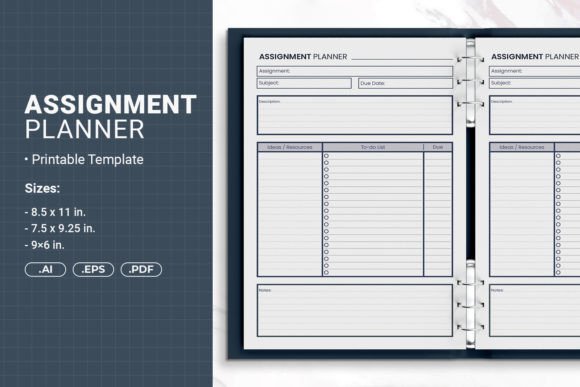
An Assignment Planner Printable Template is a pre-designed digital file that acts as a foundation for creating your own assignment planner book, printable pack, or binder insert. Instead of starting with a blank page and manually setting up columns, headers, margins, and trim lines, you open a file where all that work is already done.
In this particular package, you get files in three different formats: AI (Adobe Illustrator), EPS, and PDF. That means you can edit the designs in professional vector software if you want full control, or you can use the PDF files directly for quick printing or uploading. The template is designed specifically for print production, so it includes bleed margins, safe margins for hole punching, and standard book trim sizes that align with what both home printers and commercial printing services expect.
Three Sizes for Different Projects
One of the first decisions you will face when creating a planner is choosing the physical size. This template covers three practical options:
- 8.5 x 11 inches (215.9 x 279.4 mm) — Standard letter size. Ideal for desk planners, teacher binders, or anything where a full-page layout gives you room for detailed entries.
- 7.5 x 9.25 inches (190.5 x 234.95 mm) — A slightly more compact option that still feels spacious. Works well for professional notebooks or planners that sit comfortably on a desk without taking up too much space.
- 6 x 9 inches (152.4 x 228.6 mm) — The classic trade paperback size. Perfect for portable planners that people carry with them, and one of the most popular formats for Amazon KDP books.
Having these three sizes means you can test different formats without rebuilding your design each time. You might find that the 6x9 version works best for a student planner meant to fit in a backpack, while the 8.5x11 version suits a corporate productivity planner that lives on a desk.
Key Features That Matter for Print and Binding
A printable template is only as useful as its print readiness. This one addresses several technical requirements that often trip up first-time creators:
Bleed and Safe Margins
The files come with full bleed settings. In practical terms, that means any background colors or design elements extend slightly beyond the final trim line, so there are no white edges after cutting. The safe margin area keeps your essential content away from the edges, preventing text or important graphics from being cut off during trimming.
Hole Punch Binding Compatibility
If you are creating a binder-ready product, you need interior margins that account for punched holes. This template includes a safe margin specifically for that purpose, so users can three-hole-punch the pages without losing any content in the binding area. That makes it equally suitable for spiral binding, comb binding, or simply slipping pages into a ring binder.
Amazon KDP Ready
For self-publishers, the PDF is already set up with the required bleed and dimensions for KDP upload. You do not need to adjust trim boxes or export settings. Just add your content, export as a print-ready PDF, and upload.
Real-World Applications and Use Cases
An Assignment Planner Printable Template is not limited to one type of user. Here are several realistic ways it can be applied:
Self-Publishing Authors and Entrepreneurs
If you are building a low-content or medium-content book business on Amazon KDP, this template gives you a professional base for a line of assignment planners. You can customize the cover, add your own prompts or sections, and publish in multiple sizes from the same design. Having three sizes also lets you test which format sells best and expand your catalog quickly.
Educators and Academic Coaches
A well-designed assignment planner helps students track deadlines, break down projects into steps, and manage their workload. You can modify the template to include fields for course names, due dates, priority levels, and notes. Print them for your classroom or sell them as digital downloads for students and parents.
Professional Organizers and Productivity Coaches
Many professionals prefer a physical planner alongside digital tools. You can adapt this template into a structured daily or weekly assignment tracker for clients. Add sections for goal setting, task prioritization, and reflection. The clean layout and multiple size options let you offer something that feels custom without requiring design skills.
Digital Product Sellers
If you sell on Etsy, Gumroad, or your own site, printable planners remain a popular category. This template provides a base you can brand and sell as a digital download. The included AI and EPS files mean you can rebrand the entire design, change colors, and add your own typography before exporting as a PDF for customers.
Corporate Training and HR Departments
Companies often provide planners to employees for professional development, project management, or onboarding. A branded assignment planner printed in-house or through a local shop can reinforce company culture while keeping teams organized. The binder-friendly margin is especially useful here, since many internal materials are stored in ring binders.
Practical Benefits You Can Expect
Using a pre-built template like this one saves time, but the advantages go beyond just speed:
- Consistent formatting across sizes. You maintain the same visual hierarchy and spacing whether you publish in 6x9 or 8.5x11, giving your brand a cohesive look.
- Print reliability. Because the files include proper bleed and safe zones, you avoid common issues like clipped text, uneven margins, or white borders on full-background pages.
- Editability for different audiences. The vector files (AI and EPS) let you adjust every detail. If you want to add a section for weekly reflection or change the header font, you can do it precisely without starting over.
- Boundary-free customization for non-designers. Even if you do not use the AI files, the PDF can be opened in many tools for basic edits, or you can use it as-is for a clean, professional layout.
Considerations Before You Start
While the template handles the technical layout, your content and design choices will determine how well your planner performs. Here are a few points to keep in mind:
Know your audience. If you are creating a planner for college students, the 6x9 size might be more portable. For teachers managing multiple classes, the 8.5x11 size allows more space for detailed entries. Match the size to how the planner will actually be used.
Test print before publishing. Even with professional templates, always print a single copy at home or through a short-run printer before committing to a large batch. Check that your margins, text placement, and binding work as expected.
Think about the cover separately. The template covers the interior pages. You will still need a cover design for your book, which you can create in the same software or using a separate tool. Many creators find it helpful to keep the cover style consistent with the interior layout.
File format for your workflow. The AI and EPS files are best if you use Adobe Illustrator or a compatible vector editor. If you work exclusively in PDF tools or prefer to edit in Canva or Affinity, you might need to convert or import accordingly. The included PDF gives you a ready-to-print option regardless of your editing software.
Final Observations
The Assignment Planner Printable Template bridges the gap between having an idea and holding a finished product. It removes the repetitive setup work so you can focus on the elements that make your planner unique—the prompts, the structure, the branding, and the user experience.
For anyone selling planners, organizing teams, teaching students, or building a self-publishing catalog, having a reliable base in multiple sizes is a practical advantage. Whether you print at home, use a local bindery, or upload to Amazon KDP, the technical details are already in place. You just need to add your content and your purpose.