Forex Trading Logbook KDP Interior: A Practical Guide for Traders and Publishers
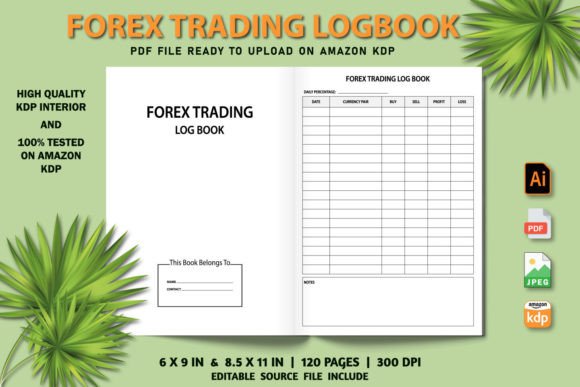
When you run a forex trading journal—or plan to publish one on Amazon KDP—the interior layout can make or break the user experience. A Forex Trading Logbook KDP Interior is a pre-designed, ready-to-upload file set that gives you both a 6 × 9 inch and an 8.5 × 11 inch version, along with editable AI, high-resolution PDF, and JPG files, all compressed into a single ZIP. With 120 pages, no bleed requirements, and Amazon-tested quality, it promises a straightforward path from concept to publishable book. But is this turnkey approach right for your project? This article walks through the distinct features, tradeoffs, and decision factors to help you evaluate whether such an interior fits your goals—as a trader building a personal log or a publisher creating a product for others.
What Makes a Forex Trading Logbook KDP Interior Distinct
Unlike a blank notebook or a generic planner, a specialized forex trading logbook interior is designed around the specific data points active traders track: entry and exit prices, lot sizes, currency pairs, stop-loss and take-profit levels, trade rationale, and risk-reward ratios. The typical 120-page structure often includes log pages, maybe a few summary or analysis spreads, and a consistent, uncluttered layout. The two format options—6 × 9 inches (a common paperback size) and 8.5 × 11 inches (closer to a letter-size journal)—give the publisher flexibility. The 8.5 × 11 version offers more space per page for detailed notes; the 6 × 9 is more portable and cheaper to print.
What sets this interior apart is the inclusion of editable AI files (300 dpi) alongside standard PDF and JPG. That means you can modify the design before uploading—adjust column widths, change fonts, add your branding, or rearrange fields. For a KDP publisher who wants a semi-custom product without designing from scratch, that middle ground between a completely static interior and a full DIY design can save hours of layout work. And because the files were tested on Amazon KDP, you reduce the risk of formatting errors that cause upload rejects or print defects.
Comparing Pre-Designed Interiors vs. Building from Scratch
If you are evaluating this kind of kit, you are likely comparing it against other options: buying a similar interior from a different creator, using a generic logbook template, or building your own using word processing or design software. Each route has strengths and limitations.
Pre-Designed KDP Interior Sets
These are the most time-efficient. The Forex Trading Logbook KDP Interior, for example, comes fully laid out, with no bleed specifications (meaning simple margins, easy for print), high resolution, and ready-to-upload files. The tradeoff is that you have limited control over the original design concept. You can edit the AI file, but the core structure—page count, column layout, field labels—is fixed unless you invest additional time. If your target audience expects a very specific log format (e.g., columns for trade psychology notes or a vertical vs. horizontal orientation), you may need to adapt the provided files further.
Generic Notebook or Planner Templates
Generic templates are often cheaper or free, but they rarely include trader-specific fields. You would spend time adding those columns yourself, and the result may not feel professional. For a first-time KDP publisher, a forex-specific interior like this one removes guesswork about what traders actually need. On the other hand, if you want a minimalist approach with only date and profit columns, a generic dot-grid journal might suffice—but it would lack the structure that serious traders look for.
Building Your Own Interior in Word or InDesign
Full DIY gives you absolute control. You can decide exact page count, font choice, column widths, and add unique features like risk calculators or performance graphs. The cost is time and expertise. Unless you are experienced with print-ready layouts, you may run into issues like missing bleed, incorrect margins, or low resolution. The Forex Trading Logbook KDP Interior removes those technical hurdles, especially because the files have already been tested on KDP. The tradeoff: you sacrifice some uniqueness for reliability and speed.
Strengths
- Two sizes in one purchase: You get both 6×9 and 8.5×11 files, which allows you to offer different editions or pick the best fit for your market. Many buyers prefer the larger format for desk use; others want the smaller for portability. Having both expands your potential audience.
- Editable AI file: If you have Adobe Illustrator or similar software, you can customize the interior. You could add your logo, change the language, or adjust the number of trades per page. This is a significant advantage over PDF-only sets where you are stuck with the original design.
- KDP tested: Because the interior was tested on Amazon’s platform, you can reduce the chance of rejection due to trim errors, resolution issues, or bleed problems. This is especially valuable for first-time publishers.
- High resolution and clean layout: 300 dpi PDFs and JPGs ensure sharp text and lines when printed. The no-bleed specification means you don’t have to worry about content being cut off at the edges—simple, safe margins.
Tradeoffs and Limitations
- Fixed page count: 120 pages might be too few for a trader who wants a year-long log (especially if they trade multiple times daily) or too many for someone who just wants a slim pocket journal. You cannot easily change the page count without editing the AI file significantly.
- Standard field structure: The fields included are likely common ones (date, pair, direction, entry, exit, pips, profit, notes). If your audience needs something niche—like separate columns for swap points or trading session—you would need to adapt the AI file or accept the existing layout.
- Aesthetic flexibility: The interior design has a specific look. If you want a very modern, minimalist, or colorful layout, you may find the provided design too plain or conservative. Editable files help, but you still work within the original grid and page structure.
- No cover or exterior: This is interior only. You will need to create or source your own cover separately. That is normal for most KDP interior packs, but keep in mind the total effort.
When Is This Forex Trading Logbook KDP Interior the Right Choice?
This interior works best in a few clear scenarios:
- You are a KDP publisher launching your first trader-oriented logbook. You want a reliable, tested foundation that you can bring to market quickly. The two-size option lets you test different formats without buying two different products.
- You are a trader who wants a printable personal log. If you prefer a physical notebook to a digital spreadsheet, you can use the PDF or JPG files to print copies at home or at a local print shop. The 8.5×11 size is especially convenient for a ring-binder or stapled booklet.
- You want to offer both a paperback and a larger edition. Having both sizes in one download simplifies production. You could even create two different product listings on KDP (one for each size) with consistent interiors.
- You need an editable base to localize or rebrand. If you are publishing in a different language or want to include your own trading rules or risk parameters, the AI file saves you from starting from scratch.
When It Might Not Be the Best Fit
In other situations, you might want to look for a different interior or a more customized solution:
- You need a highly specialized log format. For instance, if you track multiple timeframes, attach screenshots, or require complex risk calculations per trade, a fixed 120-page log may not have the space or flexibility you need.
- You plan to create a series of logbooks with varying page counts. A single interior pack gives you one design; for a series you might want a consistent design across multiple volumes, which might require making your own template.
- You prefer a minimalist, unformatted layout. Some traders just want blank grid pages to design their own columns. A structured logbook with pre-printed fields may feel too restrictive.
- You are targeting a very specific niche within forex. Day traders, scalp traders, and swing traders all have different needs regarding columns for time entries, session tracking, and trade duration. If your audience expects those details, check whether the interior’s fields match your niche.
Practical Comparisons: Editable AI Files vs. PDF-Only Interiors
One key differentiator of the Forex Trading Logbook KDP Interior is the inclusion of AI files. Let’s put that in context. Many KDP interiors on the market are PDF-only. You upload the PDF and that’s your interior. If you spot an error or want to change the font size, you are out of luck unless you rebuild it. With an AI file, you can edit vectors, move elements, and even change the color scheme. However, AI files require Illustrator (or a compatible alternative) and some design knowledge. If you lack those skills, the AI file is a bonus you cannot fully use. In that case, the high-resolution PDF and JPG versions still give you a clean, ready-to-upload product. The JPG files can be useful if you want a fixed image-based interior (though for text-heavy logs, PDF is usually better).
Another comparison: some traders may consider using a spreadsheet as a log and then printing it. But a professionally designed logbook often feels more consistent and encourages better record-keeping. The psychological benefit of a purpose-made journal shouldn’t be underestimated—it can help traders build the habit of reviewing each trade. That is a hidden advantage of any dedicated logbook interior.
Making the Most of Your KDP Interior Purchase
Whether you buy this specific interior or another, take a moment to think about your audience. If you are publishing for others, what kind of trader are you targeting? New retail traders might benefit from extra fields for market conditions or emotional state. Experienced traders might want a clean, quick-entry design with minimal clutter. The interior you choose should align with that profile.
Before uploading, always preview the files on KDP’s platform even if they claim to be tested. Open the PDF and check for any display issues. The fact that this interior comes without bleeds simplifies the process—just set trim size, upload, and check the preview. The 300 dpi resolution ensures that any screenshots or graphics (if added by you later) will be crisp.
Finally, consider combining the 6×9 and 8.5×11 versions in different product listings. You could price the smaller one lower for budget-conscious buyers and the larger one slightly higher for those who value space and readability. That pricing strategy works well when the interior quality is consistent across both formats, which this pack offers.
In summary, the Forex Trading Logbook KDP Interior provides a reliable, time-saving starting point for anyone publishing a forex trade log on Amazon KDP or printing their own journal. The editable files, two size options, and KDP-tested quality reduce common headaches, while the structured layout meets the needs of most active traders. However, if you need heavy customization, a different page count, or a niche layout, you may want to adapt the AI files further or consider a different foundation. Evaluate your own goals, your audience’s expectations, and how much time you want to invest in design—then decide accordingly. This interior is a practical tool, not a one-size-fits-all solution, and understanding that nuance helps you choose wisely.